
What is Lay-In Metal False Ceiling System?
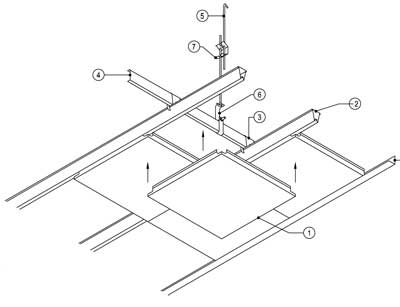
The foundation of the lay-in False system is a visible construction frame with a particular tile size. With the help of a tee grid system, which is completely visible from the bottom, we prepare a frame in this system. We determine the frame box size based on the Lay-in tile size; examples are 595mm x 595mm and 595mm x 1195mm. The lay-in false ceiling system is ready after we simply place the tile in this box.
Advantages
1. A wide range of colour and combination, combinations allow for the creation of numerous designs.
2. Outstanding toughness.
3. Simple to set up
4. Compactness.
5. Ability to select any of the several tee grid kinds, including plain, select, etc.
6. Choosing between several lay-in tile sizes at one's discretion.
Acoustical Features:
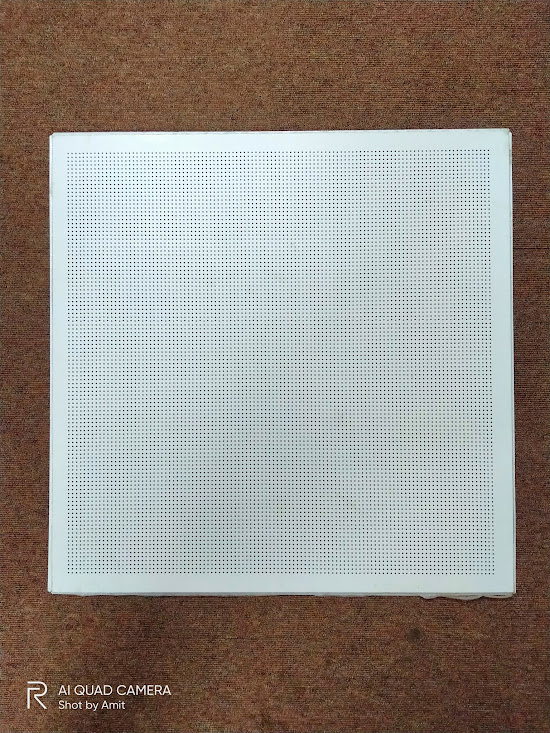
Use perforation, which is the process of punching holes into the tile, for acoustic qualities. Punching holes typically have a 1.8mm or 2.5mm diameter. In those days, there were many different types of punching available, including square and rectangular ones. People also used punching to create various designs on tiles. Apply non-woven acoustic fleece on the tile's backside after perforation to increase its acoustic properties. These perforated tiles produce acoustic environments by absorbing sound waves and diffusing them.
Insulation qualities
As a closed-type ceiling, the lay-in false ceiling forms a plenum between the real and false ceilings. The plenum regulates the environment's temperature by acting as an in-ceiling insulator. Use glass wool or rock wool pads behind the tiles if the project need further insulation.
Design:
Because we are only able to employ a few certain sizes of tile on a tee grid system, there are some design restrictions. Here, you can make a brand-new design with tiles of various colors and patterns.
Sizes:
The most common dimension for lay-in tile is 595 x 595 mm, but there are various sizes you can choose, including 295 mm, 595 mm, and 1195 mm for length and breadth. If you go above that, an alignment issue arises. In this case, material thickness also contributes to a variety of sizes.
How to select the thickness of the material?
Lay-in tile basically made in three types of material-
1. Galvanized Iron
2. Aluminum
3. Stainless Steel
So, our suggestion that:
Tile Area SQM | G.I. mm | Alum mm | S.S mm |
Small less than .354 | .4 | .6 | .4 |
Medium .354-.442 | .5 | .7 | .5 |
Big more than .442 | .6 | .8 | .6 |
Where Should I Install?
It can be utilized in a bank, hall, exhibition space, showroom, empty space, factory, lobby, shopping center, stadium, cafeteria, restaurant, and hotels, among other places.

Material
Items | Specification | Unit |
Tiles | 595x595/1195x1195mm | Sq. millimeter |
Main Runner | 10/12 | Ft |
Cross Runner | 4 | Ft |
Cross Runner | 2 | Ft |
Wall angle | 10 | Ft |
Hardware
Items | Measurement | Unit |
Anchor Fastener | Number | Pieces |
4 mm GI Rod | Length | Meter |
Butterfly/Leveling clip | Number | Pieces |
Screw/Rowel Plug | Number | Piece |
Installation:
1. When mounting edge profiles, make sure they are all installed at the same height.
2. Always put the main C-channel carrier in a 1-1.2 meter space.
3. Maintain a distance of 1.1 to 1.2 meters when using the suspension rod.
4. The runners on the tee grid should always be inserted correctly.
6. When installing something, always use gloves.
7. Whenever installing tile, always examine the runners for stains and spots and clean them if necessary.
Drawing of Connection of Lay-in Ceiling: