
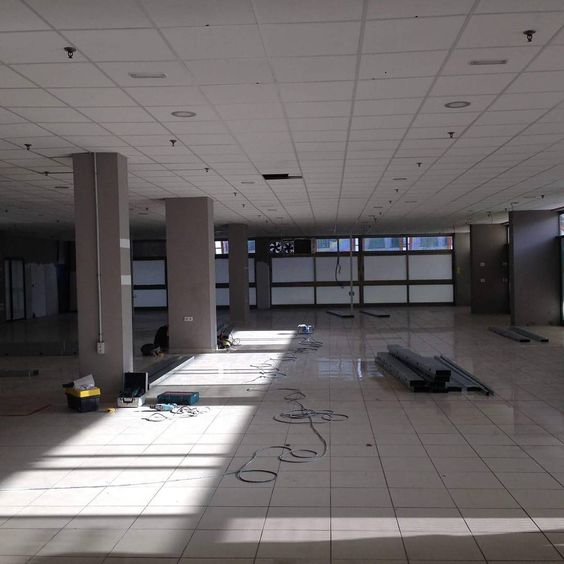
Lay-in metal ceiling tiles are commonly used in commercial and residential buildings for various reasons. Here are some of the advantages and purposes of using lay-in metal ceiling tiles:
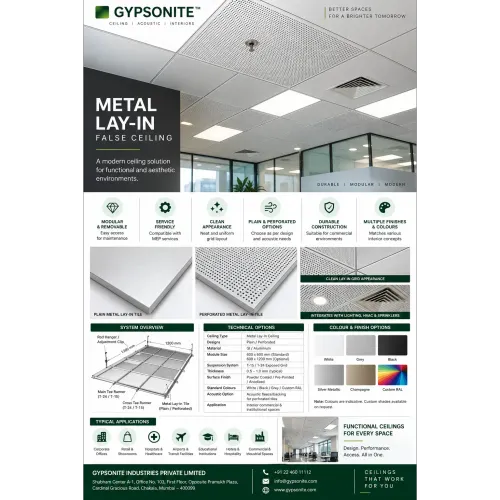
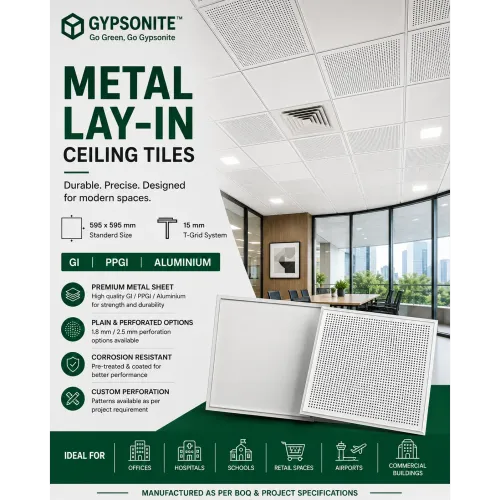
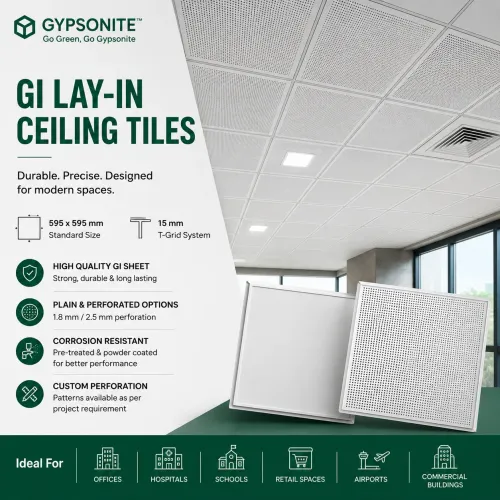
Aesthetics: Lay-in metal ceiling tiles offer a sleek and modern appearance, enhancing the overall aesthetics of the interior space. They come in a wide range of designs, finishes, and perforation patterns, allowing for creative and customizable ceiling solutions that can complement various architectural styles.
Durability: Metal ceiling tiles are highly durable and long-lasting. They are resistant to wear and tear, moisture, and mold. This durability ensures that the ceiling retains its aesthetic appeal and structural integrity over an extended period, reducing maintenance and replacement costs.
Easy Installation and Accessibility: Lay-in metal ceiling tiles are designed for easy installation and accessibility. They feature a convenient grid system where the tiles fit into a suspended grid framework. This grid system allows for quick and hassle-free installation, as well as easy access to the plenum space above the ceiling for maintenance, repairs, or modifications.
Acoustic Performance: Metal ceiling tiles can contribute to sound control and acoustic performance within a space. They can be perforated to allow sound absorption, and some tiles may have acoustic backing or insulation to enhance their sound-dampening properties. This helps to reduce noise levels, control reverberation, and improve the overall acoustic comfort of a room.
Fire Resistance: Metal ceiling tiles are inherently fire-resistant, making them a safe choice for commercial and public buildings. They have a high melting point and do not contribute to the spread of fire. This can help to enhance the overall fire safety of a structure.
Sustainability: Many metal ceiling tiles are made from recyclable materials, such as aluminum or steel. They can be easily recycled at the end of their life cycle, reducing environmental impact and promoting sustainability. Additionally, metal ceiling tiles often have high light reflectance, which can contribute to energy efficiency by maximizing natural and artificial lighting in a space.
Customization and Integration: Metal ceiling tiles can be customized to incorporate various functional elements. For example, they can be designed to accommodate air vents, light fixtures, speakers, or other building services. This allows for seamless integration of these components into the ceiling design, providing a cohesive and efficient solution.
It's important to consider factors such as the specific requirements of the space, budget constraints, desired aesthetics, and functional needs when selecting the appropriate ceiling tile system.